Books Line: A Designer Review for Business Merch
As an embroidery designer who specializes in commercial branding and merchandise production, I approach every new machine embroidery design with a critical eye. While the product description for Books Line highlights its beauty for reading pillows and personal gifts, my focus is strictly on its viability for small business merchandise and professional applications. When evaluating this design for branded patches, staff uniforms, or retail products, we must look beyond the aesthetic appeal and analyze stitch integrity, scalability, and brand alignment.
Visual Personality and Brand Alignment
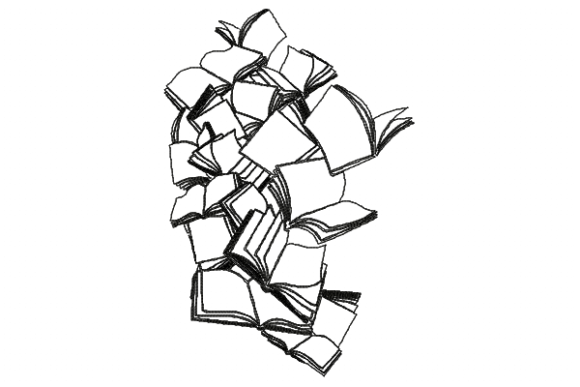
The first impression of Books Line suggests a narrative quality that transcends simple decoration. For a business owner, this visual personality is a strategic asset. The design evokes feelings of knowledge, craftsmanship, and tradition. In a commercial context, this translates exceptionally well for specific niches. Independent bookstores, educational tutoring centers, creative writing studios, libraries, and even artisanal coffee shops that emphasize a "slow living" atmosphere can leverage this imagery to reinforce their brand identity.
Unlike generic clip art, a well-digitized line art style offers a sophisticated, minimalist aesthetic that reads as premium rather than juvenile. However, because the title implies a linear or illustrative style, businesses must ensure the design aligns with their specific tone. If your brand is ultra-modern or industrial, verify that the artistic rendering of Books Line matches your existing design assets. For vintage-inspired boutiques or academic institutions, this design likely bridges the gap between nostalgic charm and professional presentation, creating immediate emotional resonance with customers who value literacy and learning.
Commercial Applications Beyond the Reading Pillow
While the description mentions outfits and gifts, the true ROI for small businesses lies in versatile merchandising. Here is how I evaluate Books Line for various commercial substrates:
- Embroidered Patches: This is perhaps the strongest use case. Line-based designs often digitize cleanly into merrowed-edge patches. An embroidered patch featuring Books Line can serve as a loyalty reward, a staff rank insignia for librarians or tutors, or a standalone retail product. The key here is ensuring the lines are thick enough to support a border without fraying.
- Tote Bag Design: Canvas totes are a staple for small business merch. The literary theme makes this design perfect for shopper bags sold at checkout or given as event swag. Because tote bags have a flat weave, they generally hold detail well, allowing the intricacies of the books illustration to shine without distortion.
- Apron Embroidery: For cafes or bakeries with a literary theme, placing this design on the chest or pocket of an apron adds a layer of curated professionalism. It signals to customers that the business pays attention to thematic details. Apron embroidery requires careful placement to avoid high-wear areas like pockets or ties where friction could damage delicate line work over time.
- Custom Apparel and Uniforms: On polo shirts or work tees, Books Line functions best as a left-chest logo or a sleeve accent. It provides a softer alternative to corporate block lettering, making staff appear more approachable and culturally aligned with the business mission.
Technical Considerations for Production
A beautiful screen image does not always guarantee a successful finished product. As a professional, I must address the technical realities of running this digital embroidery file in a production environment. Since the specific stitch density and dimensions are not provided in the base description, you must verify these metrics before purchasing or hooping.
Scalability and Detail Retention
Line art designs are notoriously sensitive to resizing. If Books Line relies on satin stitches or fine running stitches to define the books, reducing the size for a cap embroidery project could result in lost detail or thread breaks. Caps present additional challenges due to curvature; intricate horizontal lines may warp on the rounded front panel. Always test the design at your intended cap size before committing to a bulk run. Conversely, enlarging the design for a large back print on a hoodie may cause the lines to look sparse or disjointed if the original digitizing did not account for expansion.
Fabric Texture and Stabilizer Selection
The interaction between thread colors and fabric texture dictates legibility. On smooth cotton twill or poplin, Books Line should render crisply. However, on textured fabrics like linen (common for reading pillows) or pique knits (common for polos), fine lines can get swallowed by the weave. In these instances, using a water-soluble topping is non-negotiable to keep the stitches sitting on top of the fabric. For commercial embroidery on dark uniforms, ensure there is sufficient contrast. White or cream thread on navy fabric will make the line work pop, whereas low-contrast combinations will render the design invisible from a distance.
Quality Control and Pre-Production Protocol
Never send a new design straight to production based solely on a digital preview. Follow this professional workflow when integrating Books Line into your business inventory:
- Verify File Compatibility: The description notes multiple formats, but confirm your specific machine reads the version provided. Corrupt files can cause costly needle breaks or misalignment.
- Conduct a Stitch-Out Test: Run the design on the exact material you intend to sell. Check for registration errors where outlines fail to meet fill areas. Inspect the tension; loose bobbin threads on the back can ruin the perceived value of a handmade product.
- Evaluate Hoop Size Requirements: Ensure the design fits within your machine’s maximum field without requiring re-hooping. Multi-position hooping increases labor time and margin for error, which impacts profitability for custom apparel orders.
- Create a Printable Mockup: Before offering merchandise to clients, generate a realistic mockup showing Books Line on the actual garment. This manages customer expectations regarding size and placement. A printable mockup also serves as an internal reference for your operators to maintain consistency across different batches.
- Wash Testing: If this design is for staff uniforms or children's clothing, wash the test sample three times. Line art can unravel if lock stitches are insufficient at the start and end points. Durability is paramount for maintaining brand identity over the lifespan of the garment.
Licensing and Commercial Viability
Finally, a crucial note for Etsy sellers and merch creators: always confirm the licensing terms included with the embroidery file. While the design is categorized under "Back To School," which implies seasonal relevance, your ability to sell finished goods featuring Books Line depends entirely on the designer's commercial license. Some licenses allow for unlimited physical sales but prohibit digitizing modifications or mass production. Clarifying this protects your business from intellectual property disputes and ensures ethical sourcing of design assets.
In summary, Books Line holds significant promise for businesses in the education, literary, and artisanal sectors. Its potential for tote bag design, patches, and thematic uniforms is high, provided that technical due diligence is performed. By treating this design as a commercial component rather than just a decorative element, and by rigorously testing for stitch density and fabric compatibility, small business owners can transform this beautiful artwork into a profitable, professional branding tool. Always prioritize the physical stitch-out over the digital promise to ensure your merchandise meets the standards your customers expect.